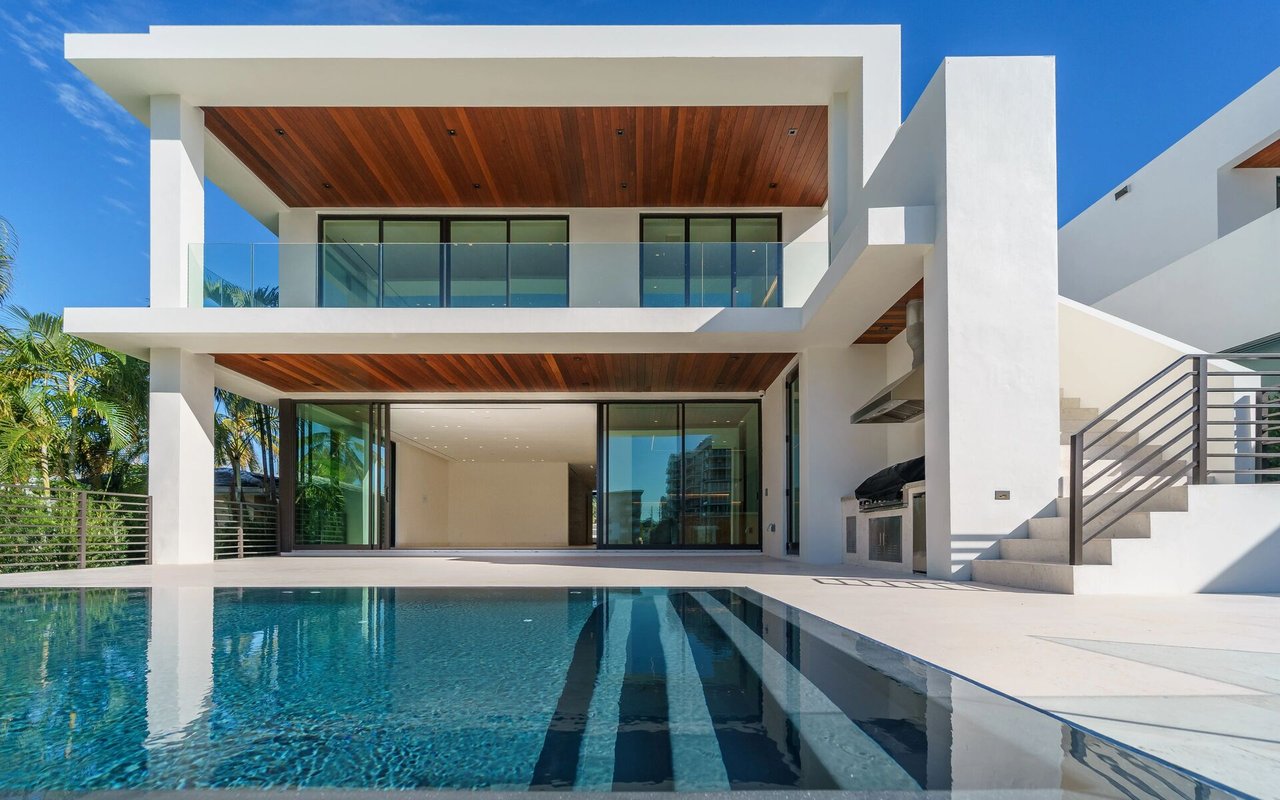
A three-bedroom concrete home in Ramey, the old Air Force housing zone a few minutes from the airport, was recently listed asking $349,000. That works out to roughly $290 a square foot. A few streets over, a comparable home that actually closed in the twelve months ending in early June 2026 sold for something closer to $114 a square foot. Same neighborhood, same construction era, same buyer pool. The gap between those two numbers is not a fluke of one listing. It is close to the structural pattern across Aguadilla's for-sale-by-owner market right now, and it matters more to a buyer building a comp sheet than almost any other number on the page.
If you are cross-shopping Aguadilla against Rincón, Dorado, or the San Juan metro, the price-per-square-foot figure you pull from an active listing is very likely overstating what the market will actually bear. Here is what is really going on, and why the gap itself, not just the beach access, is the reason investor interest keeps landing on this stretch of the northwest coast.
The Number on the Sign Isn't the Number at Closing
Aguadilla's active for-sale-by-owner inventory currently averages around $194 to $222 per square foot, with a median list price near $479,360 as of this summer. That is the number a buyer sees first: on a printed flyer, in a listing description, in the mental anchor that gets set before a single showing.
But homes that actually conveyed in Aguadilla in the twelve months ending in early June 2026 closed at a median price of $437,493, working out to roughly $114 per square foot of living space. A separate tally of sales activity current as of mid-June 2026 puts the average closed price at $255,328, or about $164 a square foot, with properties spending an average of 82 days on the market before selling. Two different data sources, two different sale sets, and both land well under the $194 to $222 range that active listings are asking.
This is not a story about Aguadilla being overpriced or underpriced in some abstract sense. It is a story about who sets the asking number. A market with a heavy share of owner-listed inventory, rather than agent-represented comparables pulled from closed MLS data, tends to price on aspiration rather than on what a similar home actually cleared for last quarter. The seller anchors to what they paid, what they put into the kitchen, or what a neighbor's listing (not sale) is asking. None of that is dishonest. It is just not the number a buyer should be running their offer math against.
If you are comparing Aguadilla to another municipality using the price-per-square-foot figure from active listings, you are comparing an asking number in one market to a closing number in another. Pull the sold comps first.
Why Ramey Keeps Showing Up in the Comps
Ramey and the surrounding Punta Borinquen area explain a good share of both sides of this gap. The community was built as U.S. Air Force housing before the base closed, and it has since become a planned residential zone known for wide streets, mature landscaping, and a short drive to the beach. It sits close to Rafael Hernández Airport, the Borinquen golf course, and the coastline that carries a World Surfing Reserve designation, which gives the area a specific kind of buyer: someone who wants beach access and a turnkey home without committing to Rincón's tighter, pricier inventory.
That combination of mid-century military housing stock and later infill construction is exactly the kind of market where asking prices and sold prices diverge most. Older concrete homes built decades ago, priced by an owner who has watched newer coastal construction command higher numbers elsewhere, get listed high. The buyers who actually transact are the ones willing to negotiate down to what the structure and lot genuinely support. That negotiation is where the $114 to $164 per square foot figures come from, and it is worth asking your agent to show you the closed comps for Ramey specifically before you anchor to a citywide average.
The Second Gap: What San Juan and Dorado Charge That Aguadilla Doesn't
There is a second, separate mechanism at work here, and it compounds the price gap rather than explaining it. Aguadilla currently has no municipal ordinance governing short-term rentals. Compare that to two other corridors along the island's north coast:
| Municipality | Municipal STR Requirement |
|---|---|
| San Juan | Annual licensing fee, $100 to $500 depending on unit type |
| Dorado | Permit system, $1,000 to $3,000 |
| Aguadilla | No municipal ordinance beyond Puerto Rico's general framework |
Every short-term rental operator in Puerto Rico still owes the island-wide 7 percent room occupancy tax, needs a Tourism Company innkeeper registration, and has to clear standard safety and health requirements through the Office of Management and Permits. Aguadilla does not layer a municipal fee or permit cap on top of that. San Juan and Dorado do.
For an investor comparing net yield across municipalities, that difference shows up every year, not just at closing. It is one more reason the math on an Aguadilla purchase can pencil out even when the sticker price looks similar to a coastal alternative once you have the actual sold comp instead of the asking number.
What the Short-Term Numbers Actually Look Like
Once a buyer is working from the sold comps rather than the asking prices, the short-term rental data helps confirm whether the numbers hold up. As of June 2026, Aguadilla scores 93 out of 100 on AirDNA's short-term rental market benchmark, with average annual revenue of about $19,400 per listing, 48 percent occupancy, and a $163 average daily rate. Revenue is up modestly year over year even as the average nightly rate has softened, which points to more nights booked rather than higher prices driving the growth.
None of that is a headline number. It is a steady, mid-tier performance profile, not a boom market. But steady performance against a $114 to $164 per square foot cost basis is a very different equation than the same steady performance against a $194 to $222 asking price. The regulatory gap and the price gap are not independent facts. They reinforce each other.
The Trade a Rincón Comparison Misses
Rincón gets most of the attention as Puerto Rico's original west coast draw, and for good reason. It has one of the island's most established short-term rental markets, which means an investor there can underwrite against real historical occupancy rather than a newer market's projections. That track record carries a price. Aguadilla sits about 40 minutes away, shares the same Rafael Hernández Airport that most west coast residents actually fly through, and has become known for having the most stable fiber internet on the island, particularly around Ramey. A coliving operator, Outsite, operates a location in Aguadilla built around that same draw: reliable connectivity, walkable beach access, and a shared workspace for people working remotely.
The comparison that matters is not "which town is nicer." It is that Rincón's premium buys a longer performance record, while Aguadilla's discount buys a lower cost basis and one less layer of municipal permitting. Neither is automatically the better trade. It depends on whether the buyer is underwriting for appreciation, for rental income, or simply for a home they intend to use themselves.
What to Verify Before You Build an Offer Around Either Number
- Ask for closed comps in the specific sub-area, not a citywide average. Ramey, Crash Boat, and the town center do not price the same.
- Confirm whether the listing you are evaluating is agent-represented or for-sale-by-owner, since the gap between asking and closing tends to be widest in the FSBO segment.
- If short-term rental income is part of the plan, verify current occupancy tax and registration requirements directly with the Tourism Company and OGPe rather than relying on a general summary, since municipal frameworks can change.
- Run your own per-square-foot math against the trailing 12 months of actual sales, not the current active inventory.
FAQ
Is Aguadilla cheaper than Rincón to buy in? Sold comps in Aguadilla have recently landed well under $200 per square foot, while Rincón's longer-established market and rental track record generally carry a premium. The right comparison depends on whether you value Rincón's rental history or Aguadilla's lower cost basis and lighter municipal permitting more.
Does Aguadilla require a short-term rental permit? There is no municipal ordinance in Aguadilla beyond Puerto Rico's island-wide framework, which includes the 7 percent room occupancy tax, Tourism Company registration, and standard safety compliance. That is a lighter local requirement than San Juan's licensing fee or Dorado's permit system.
Why do asking prices in Aguadilla run so much higher than sold prices? A large share of active inventory is listed directly by owners rather than priced from recent closed comparables, which tends to anchor asking prices to sentiment or past improvements rather than what the market has actually paid.
If you are weighing Aguadilla against another stretch of the coast and want the real closed comps for a specific block, not the citywide average, Coldwell Banker - Puerto Rico can walk you through what has actually sold near Ramey and what that means for your offer. Request a private consultation to get started.