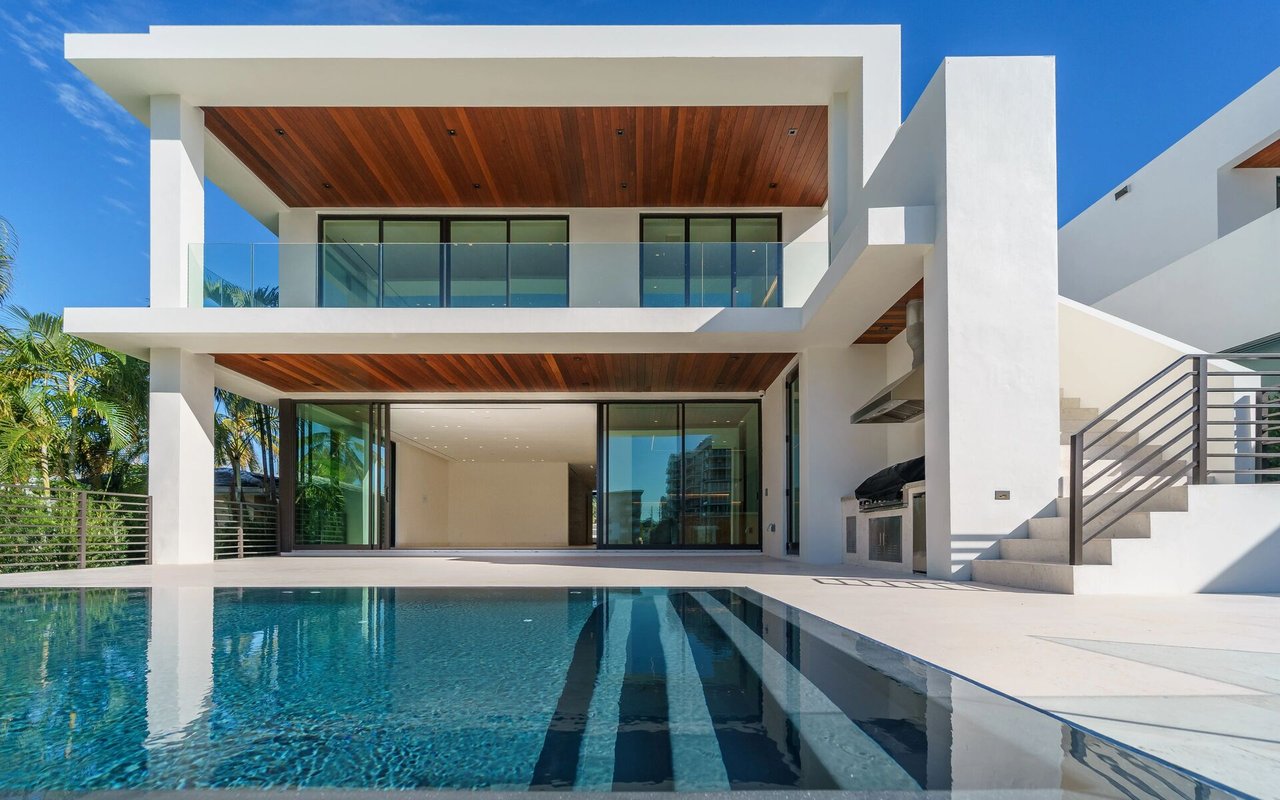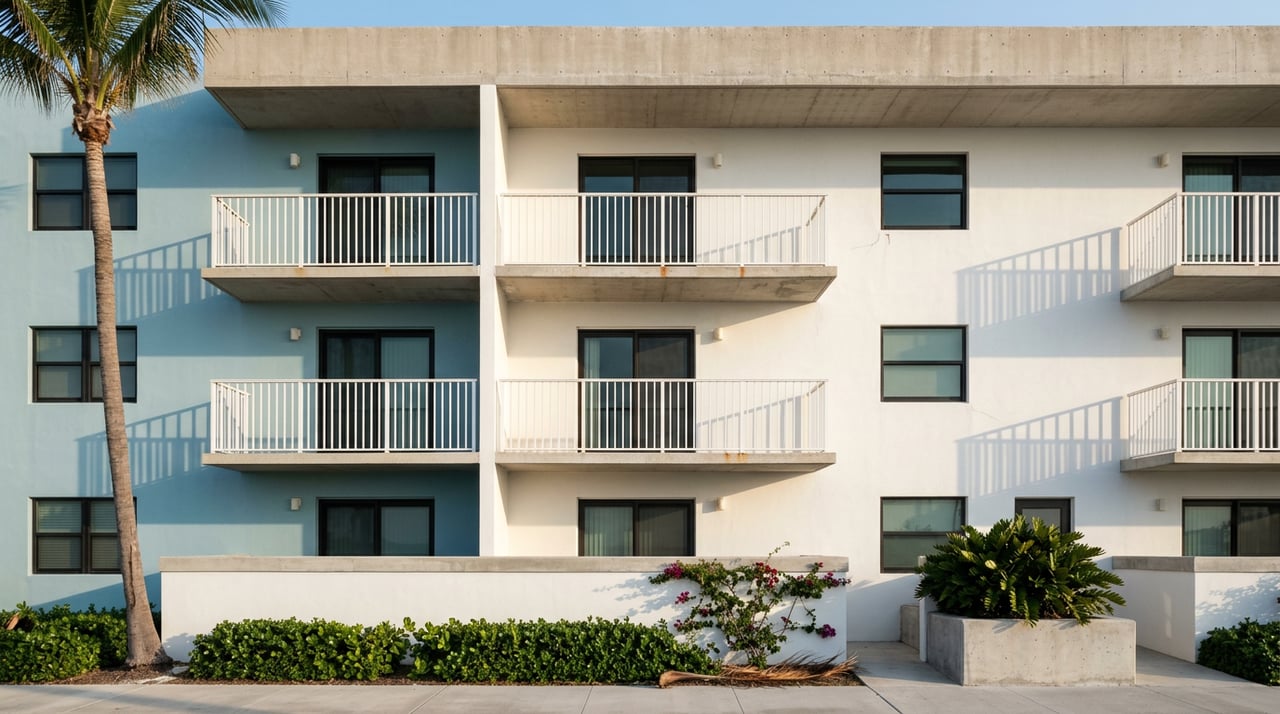
Two condos. Same building era, same walk to the sand, same price per square foot on paper. One can legally host a guest for three nights next weekend. The other cannot, not without a board vote that may never come. Nothing on the listing sheet tells you which is which.
That gap is not a footnote. It is the single biggest swing factor in what an Isla Verde condo is actually worth to a buyer who wants the option of rental income, and it lives nowhere near the number most people compare first.
The listing that gives away the game
Look at how sellers actually market their units here. A studio at Coral Beach Condominium was recently listed with the phrase "Airbnb allowed" printed directly into the description, right alongside direct beach access and a fully equipped kitchen. Compare that to a three-bedroom at Los Pinos East Condominium, a rare 1,510-square-foot layout listed at $489,000, marketed instead around its size, its original condition, and its renovation upside for a buyer who wants to customize a primary residence.
Neither listing mentions a municipal permit number. Neither needs to. The reason "Airbnb allowed" earns its own line in a listing description is precisely because it is not assumed. If short-term rental rights were guaranteed by geography alone, no seller would bother stating it. They state it because the building, not the address, decides.
Why the municipality gives you no answer at all
Here is the part that surprises people who did their homework on Condado first. San Juan has an actual short-term rental ordinance on the books, Ordinance 39, which sets specific annual permit fees, $100 for shared residential units and $500 for non-shared units, and applies to Condado buildings directly. Isla Verde sits in Carolina, and Carolina has no equivalent municipal ordinance restricting short-term rentals. At the city level, that makes Isla Verde look like the more permissive market.
It also makes the city-level answer irrelevant. With no municipal restriction to check, the entire question of whether a unit can operate as a nightly rental collapses down to one document: the condominium's own declaration and bylaws, plus whatever the board has voted on since. A building can ban short-term stays outright, cap the number of units allowed to rent short-term, require minimum stay lengths, or simply say nothing and let a board change its mind next quarter. None of that shows up in a median price or a price-per-square-foot figure, and none of it shows up on a municipal registry, because there isn't one to check.
Some buildings lean hard into the tourism identity. Marbella del Caribe comes up repeatedly among hosts as one of the most active short-term rental buildings in the area, prized for its location and amenities as much as its accommodating culture around rentals. Full-service oceanfront towers like La Concha Resort Residences, Seabourne, and Ocean Club market themselves around exactly this kind of income flexibility. Other buildings, often the ones pitched to buyers hunting for a primary residence rather than an income property, simply don't come up in that conversation at all.
What the median price actually flattens
Isla Verde's median listing price sat around $895,000 as of late 2025, with typical units spending about 112 days on market, a pace that points to a market still working through pricing after the run-up of the past few years. That single number covers everything from a $489,000 fixer-upper three-bedroom at Los Pinos East to oceanfront towers pushing into the millions.
Monthly HOA fees tell a similarly incomplete story on their own. Standard buildings run roughly $300 to $800 a month, while full-service oceanfront towers with generators, cisterns, concierge, and round-the-clock security frequently land between $500 and $1,000 or more. A high fee by itself is not a warning sign. It is only a warning sign if the building's reserve study shows those fees aren't actually funding future repairs, which is a document you have to request, not a number you can infer from the dues.
For context, buyers cross-shopping Condado will see that neighborhood's median run about $790 per square foot as of July 2025, a useful benchmark for how oceanfront San Juan pricing behaves broadly, but not a substitute for building-level diligence in either neighborhood.
The document packet that actually answers the question
Before comparing price per square foot across two Isla Verde listings, request the same packet from both buildings:
- The condominium declaration and bylaws, specifically any clause addressing rentals, minimum stay length, or caps on the number of units that can operate short-term
- The last 12 to 24 months of board meeting minutes, which show whether short-term rentals have come up for a vote recently or are likely to
- The current reserve study and the last two to three years of financial statements, to see whether HOA dues are funding real maintenance or deferring it
- The master insurance certificate, including named-storm deductibles, since a high deductible split among owners after a hurricane becomes a special assessment regardless of what the building allows on Airbnb
Ask for the declaration, bylaws, last two to three years of financials, current budget, reserve study, insurance certificate, and 12 to 24 months of minutes before you assume anything about rental rights or dues stability.
That packet is the real comparison document. A unit priced ten percent below the median but sitting in a building with a banned-rentals clause and a thin reserve fund is not a better deal. It is a different asset entirely, and the portal listing will never say so.
The regulatory horizon worth watching, not reacting to
Puerto Rico's short-term rental framework is not frozen. Senate Bill 238 has been under legislative consideration and would create a centralized municipal registry with a more uniform licensing structure across the island. It has not passed as of this year, and nobody can tell you exactly what version might eventually become law. What buyers can plan around today are the rules already in force: the 7% room occupancy tax under Act 272-2003 on stays under 90 days, and Puerto Rico's general 11.5% sales and use tax, both of which apply regardless of which building you buy into.
The larger structural point still holds. Building bylaws are the layer that actually moves today, sometimes with a single board vote, while commonwealth tax law changes far more slowly. Treat a building's current rental posture as a snapshot, not a guarantee, and get any promise from a board in writing rather than relying on what the current owner tells you.
Why the stakes keep rising here specifically
None of this diligence matters in a vacuum. Isla Verde sits inside Luis Muñoz Marín International Airport's district, an airport that moved 13.6 million passengers in 2025 and runs more than 80 daily nonstop flights to major U.S. cities. That proximity is the demand engine behind every rental projection anyone will show you, and it is not replicable. The coastal strip is fully built, hurricane-resistant construction runs $300 to $500 per square foot, and new beachfront supply is, for practical purposes, off the table. Island-wide, only around 420 new residential units are expected to deliver in 2026. Scarcity like that is exactly why the building-level rental question deserves more scrutiny than it gets, not less. When you cannot build your way out of a shortage, the units that can legally capture visitor demand are worth meaningfully more than identical units that cannot, and that premium is invisible until you ask.
FAQ
Does Isla Verde have its own short-term rental ordinance separate from Carolina's? No. Isla Verde is part of the municipality of Carolina, and Carolina has not implemented a specific municipal ordinance governing short-term rentals, unlike San Juan's Ordinance 39, which applies to Condado.
If there's no municipal restriction, does that mean any Isla Verde condo can be rented nightly? No. The condominium's own declaration and bylaws govern whether short-term rentals are allowed, and boards can restrict, cap, or ban them independent of what the municipality permits.
What single document would tell me the most before I make an offer? The condominium declaration and bylaws, paired with the last 12 to 24 months of board minutes, will show both the written rule and whether the board has recently moved to change it.
If you are comparing Isla Verde buildings and want the declaration, bylaws, and financials pulled before you write an offer, Coldwell Banker Puerto Rico can request a private consultation and walk the building-level details with you before the price per square foot ever enters the conversation.